
“`html
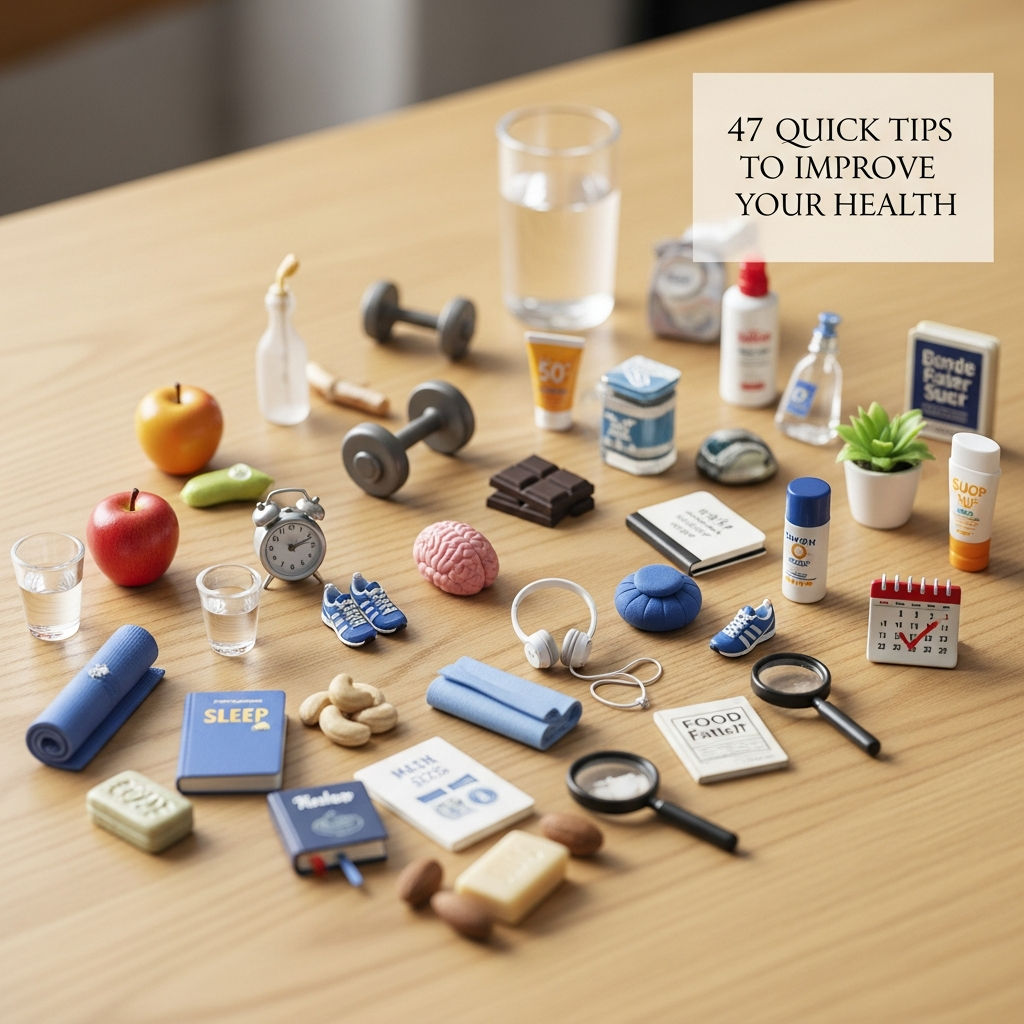
47 Quick Tips to Improve Your Health Starting Today
Improving your health often feels like a monumental task. We are bombarded with complex diet plans, expensive gym memberships, and conflicting bio-hacking advice. However, true wellness is rarely the result of one massive change. Instead, it is the accumulation of small, consistent habits that transform your physical and mental well-being over time.
If you are looking for actionable ways to boost your energy, sharpen your mind, and protect your long-term vitality, you’ve come to the right place. Here are 47 quick, science-backed tips to improve your health without overturning your entire life.
Nutrition and Hydration Habits
What you put into your body is the foundation of your health. You don’t need a restrictive diet to see results; you just need better choices.
- 1. Drink a glass of water first thing in the morning: Rehydrate your body after eight hours of fasting to kickstart your metabolism.
- 2. Use smaller plates: This simple psychological trick helps with portion control and prevents overeating.
- 3. Eat the “rainbow”: Aim for at least three different colors of vegetables on your plate to ensure a variety of phytonutrients.
- 4. Chew your food 20 times: Slowing down aids digestion and gives your brain time to register fullness.
- 5. Swap soda for sparkling water: Cut hundreds of empty calories and grams of sugar by opting for carbonated water with a squeeze of lime.
- 6. Increase your fiber intake: Add chia seeds, flaxseeds, or beans to your meals to improve gut health and stabilize blood sugar.
- 7. Never shop for groceries while hungry: This prevents impulsive purchases of processed, high-sugar snacks.
- 8. Drink green tea: It is packed with antioxidants called catechins that support heart health.
- 9. Prepare your own lunch: Restaurant meals are often hidden sources of excess sodium and unhealthy fats.
- 10. Add cinnamon to your coffee: It can help regulate blood sugar levels and adds flavor without calories.
- 11. Eat fermented foods: Incorporate yogurt, kimchi, or sauerkraut to boost your healthy gut bacteria.
- 12. Keep healthy snacks visible: Place a bowl of fruit on the counter and hide the cookies in a high cupboard.
Physical Activity and Movement
Exercise doesn’t always have to happen in a gym. Movement is about reducing sedentary time and keeping your joints fluid.
- 13. Take the stairs: It’s one of the easiest ways to get your heart rate up during the workday.
- 14. Walk while on the phone: If you’re on a long call, pace around the room or walk outside.
- 15. Stand up every 30 minutes: Breaking up long periods of sitting reduces the risk of metabolic issues.
- 16. Practice “Micro-Workouts”: Do 10 air squats or push-ups while waiting for your coffee to brew.
- 17. Park further away: Force yourself to take those extra 200 steps every time you visit the store.
- 18. Stretch before bed: Light stretching relieves muscle tension and prepares the body for rest.
- 19. Try a standing desk: Even standing for two hours a day can burn significantly more calories than sitting.
- 20. Focus on your posture: Pull your shoulders back and down; it improves breathing and reduces back pain.
- 21. Walk for 10 minutes after dinner: This helps lower post-meal glucose spikes and aids digestion.
- 22. Use a foam roller: Spend five minutes rolling out tight muscles to improve circulation and flexibility.
Mental Health and Stress Management
Your mental state has a direct impact on your physical health. Reducing cortisol levels is vital for long-term longevity.

- 23. Practice the 4-7-8 breathing technique: Inhale for 4, hold for 7, exhale for 8 to calm your nervous system.
- 24. Start a gratitude journal: Writing down three things you are thankful for each day rewired your brain for positivity.
- 25. Set a “Digital Sunset”: Turn off all screens at least one hour before bed to reduce blue light exposure.
- 26. Learn to say “no”: Overcommitting is a leading cause of chronic stress.
- 27. Spend time in nature: Even 15 minutes in a park can significantly lower your stress hormones.
- 28. Listen to a podcast or music: Use audio to shift your mood during a stressful commute.
- 29. Practice mindfulness: Focus entirely on the present moment, whether you are eating, walking, or showering.
- 30. Limit news consumption: Constant exposure to negative headlines can induce unnecessary anxiety.
- 31. Declutter one small space: A clean environment often leads to a clearer, calmer mind.
- 32. Reach out to a friend: Social connection is a primary pillar of psychological resilience.
Sleep Hygiene and Recovery
Sleep is when your body repairs itself. Without quality rest, your diet and exercise efforts will yield fewer results.
- 33. Keep your bedroom cool: The ideal temperature for deep sleep is between 60–67°F (15–19°C).
- 34. Go to bed at the same time every day: Consistency regulates your circadian rhythm.
- 35. Limit caffeine after 2:00 PM: Caffeine has a half-life that can interfere with your ability to fall asleep hours later.
- 36. Use blackout curtains: Total darkness encourages the natural production of melatonin.
- 37. Read a physical book: This is a great way to wind down without the stimulation of a screen.
- 38. Avoid heavy meals late at night: Digestion can interfere with deep sleep cycles.
- 39. Take a warm bath: The drop in body temperature after a bath signals to your brain that it’s time for sleep.
- 40. Get 15 minutes of sunlight in the morning: This sets your internal clock for better sleep at night.
Lifestyle and Preventative Care
Small lifestyle tweaks can prevent chronic diseases and improve your overall quality of life.
- 41. Floss your teeth daily: Oral health is closely linked to heart health and systemic inflammation.
- 42. Wear sunscreen every day: Protect your skin from UV damage, even on cloudy days.
- 43. Wash your hands frequently: It remains the most effective way to prevent the spread of common viruses.
- 44. Replace your toothbrush every three months: Old bristles harbor bacteria and become less effective.
- 45. Take a Vitamin D supplement: Especially during winter months when sun exposure is limited (consult your doctor first).
- 46. Schedule your annual check-up: Prevention and early detection are the best medicines.
- 47. Smile more: The act of smiling releases endorphins and can actually lower your heart rate during stress.
Conclusion: The Power of Consistency
You don’t have to implement all 47 tips at once. In fact, trying to do so might lead to burnout. The best approach to improving your health is to choose three or four tips from this list and commit to them for the next 21 days. Once those habits become second nature, return to this list and pick a few more.
Health is a journey, not a destination. By making these small, quick adjustments to your daily routine, you are investing in a future of higher energy, better moods, and a longer, more vibrant life. Start with one tip today—your body will thank you for it.
“`