How to Master Health News in 13 Days: A Comprehensive Guide to Medical Literacy
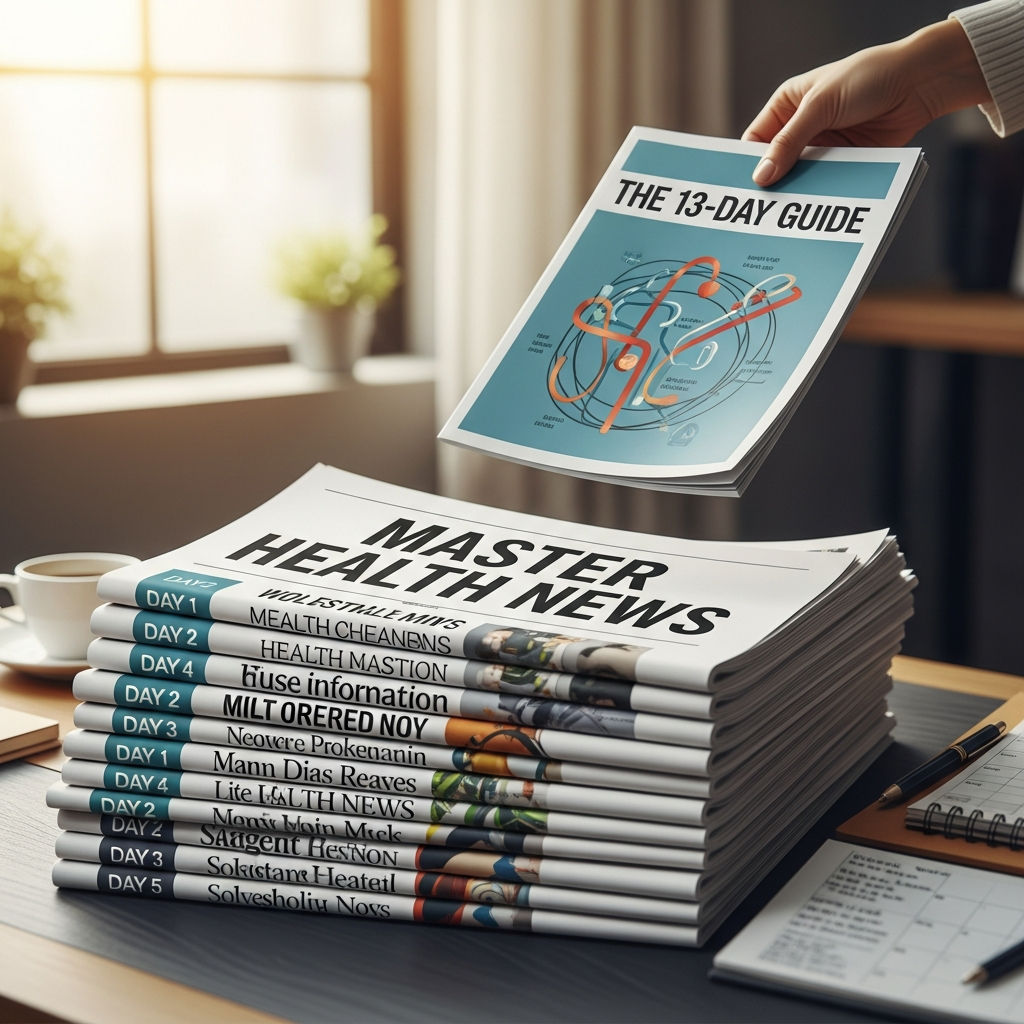
In an era where a single headline can claim that coffee causes cancer on Monday and prevents it on Tuesday, the ability to navigate health news is a vital life skill. Misinformation spreads faster than clinical trials, and “health halo” marketing often masks poor science. However, mastering the art of consuming health news doesn’t require a medical degree. With a structured approach, you can transform from a confused reader into a savvy health analyst in just 13 days.
This guide provides a step-by-step roadmap to building medical literacy, understanding the hierarchy of evidence, and identifying the red flags of health misinformation. By the end of this period, you will be able to look past clickbait and understand what the data actually says about your well-being.
Phase 1: Building the Foundation (Days 1–4)
Day 1: Identify Primary vs. Secondary Sources
The first step in mastering health news is knowing where the information originated. Most people consume “secondary sources”—news articles, blog posts, or social media clips. While these are accessible, they often strip away the nuance of the “primary source” (the original study).
- Primary Sources: Original research published in peer-reviewed journals like The Lancet, JAMA, or The New England Journal of Medicine (NEJM).
- Secondary Sources: Major news outlets (BBC, NYT) or health-specific sites (WebMD, Healthline).
- Task: Find a health news article and trace it back to the original study link. If the article doesn’t link to a study, treat it with skepticism.
Day 2: Decode the Jargon
Health news is filled with “science-speak” that can be intimidating. Today, focus on learning three critical terms:
- Peer Review: A quality control process where independent experts evaluate a study before publication.
- Statistically Significant: This means the result likely didn’t happen by chance, but it doesn’t always mean the effect is large or meaningful in real life.
- Meta-analysis: A “study of studies” that combines data from many trials to find a broader trend. This is often the gold standard of evidence.
Day 3: Correlation vs. Causation
This is the most common pitfall in health reporting. Just because two things happen together doesn’t mean one caused the other. For example, people who eat more blueberries might live longer, but they might also exercise more and have higher incomes. Is it the berries or the lifestyle?
On Day 3, practice asking: “What else could be causing this result?”
Day 4: Understanding the Hierarchy of Evidence
Not all studies are created equal. Mastering health news requires knowing the “Pyramid of Evidence”:
- Animal/In Vitro Studies: Lowest level. What happens in a petri dish or a mouse often doesn’t happen in a human.
- Observational Studies: Researchers watch what people do. Good for finding links, bad for proving cause.
- Randomized Controlled Trials (RCTs): The gold standard. Participants are randomly assigned to a group to test a specific intervention.
- Systematic Reviews: The highest level, summarizing all available high-quality evidence on a topic.
Phase 2: The Analytical Deep Dive (Days 5–8)
Day 5: Relative Risk vs. Absolute Risk
Headlines love relative risk because it sounds dramatic. A headline might scream: “Eating Processed Meat Increases Cancer Risk by 18%!” This is relative risk. However, the absolute risk might move from a 5% lifetime risk to a 6% risk. On Day 5, always look for the absolute numbers to keep things in perspective.
Day 6: Scrutinize the Sample Size and Population
A study on 10 elite male athletes doesn’t necessarily apply to a 50-year-old woman with a desk job. Look for the “n” (number of participants) and the demographics. Small sample sizes are prone to “fluke” results that can’t be replicated.
Day 7: Follow the Money (Conflicts of Interest)
Science is expensive, and someone has to pay for it. While industry-funded research isn’t always biased, it is a factor to consider. Check the “Disclosures” or “Conflicts of Interest” section at the end of a study. If a study saying “chocolate is a superfood” was funded by a confectionery giant, you should look for independent replication of those results.
Day 8: The Power of the Placebo and Nocebo
The human mind is a powerful variable. On Day 8, learn about the placebo effect (feeling better because you expect to) and the nocebo effect (feeling side effects because you expect them). High-quality health news should mention whether a study was “double-blind,” meaning neither the researchers nor the participants knew who got the real treatment.
Phase 3: Critical Thinking and Red Flags (Days 9–11)
Day 9: Spotting “Science-y” Marketing
Marketing often uses “science-y” words to sound authoritative without having the data to back it up. Be wary of terms like:
- “Clinically proven” (without a citation).
- “Detoxify” or “Cleanse” (the liver and kidneys do this for free).
- “Miracle breakthrough” (science moves in small steps, rarely leaps).
Day 10: Headline Literacy
Journalists don’t usually write their own headlines; editors do, and their goal is clicks. On Day 10, practice the “Rule of the Question Mark.” If a headline ends in a question mark (e.g., “Does Lemon Water Cure Diabetes?”), the answer is almost always “No” or “We don’t know yet.” Read the article, not just the bold text.
Day 11: Assessing the Source’s Reputation
Not all “experts” are equal. Check the credentials of the person being quoted. Are they a PhD or MD in the relevant field? Or are they a “wellness influencer” with a certificate from an unaccredited online course? Use tools like Google Scholar to see if the expert has published legitimate research in the field they are discussing.
Phase 4: Synthesis and Routine Building (Days 12–13)
Day 12: Use Technology Wisely
Leverage tools to help you filter the noise. Use PubMed for searching medical abstracts and Google Scholar for finding citations. You can also use AI summarization tools, but always verify their output against the original text, as AI can sometimes “hallucinate” or misinterpret complex data.
Day 13: Establish Your Daily News Diet
On your final day, curate a list of “trusted” sources that prioritize nuance over sensation. This might include:
- The “Upshot” from the New York Times.
- STAT News for biotech and pharma.
- Cochrane Library for systematic reviews.
- The “Health and Science” sections of reputable broadsheets.
Conclusion: The Path to Health Literacy
Mastering health news isn’t about knowing everything; it’s about knowing how to ask the right questions. Over these 13 days, you have shifted from a passive consumer to an active skeptic. You now know that a “breakthrough” is usually just a “finding,” that “links” are not “causes,” and that “significant” doesn’t always mean “important.”
In a world of information overload, your best defense is a disciplined mind. Keep these principles in your toolkit, and you will never be misled by a sensationalist health headline again. Your health—and your peace of mind—are worth the effort.